 |
Book Arts |
A selection of 90 artists’ books, publications and small printed works by members of LAND2 and from the archives at the Centre for Print Research.
This exhibition accompanies a Bookarts at UWE / LAND2 symposium in Bristol discussing environmental themes including water quality, land degradation, pollution and damage to the landscape, interventions and ideas. It shares some of the outcomes from UWE’s HAS-ACE Connecting Research Project Grant Scheme – Slow Violence and River Abuse: The Hidden Effect of Land Use on Water Quality (led by Niamh Fahy and Gillian Clayton) – alongside curated presentations from national artists, geographers, writers, environmentalists and scientists. The creative practice-led research network LAND2, “land squared”, was started in 2002 as a national network of artist/lecturers and research students with an interest in landscape/place-oriented art practice. Its convenors are: Iain Biggs (independent), Mary Modeen (Dundee) and Judith Tucker (University of Leeds).
The artists’ books on display at Bower Ashton Library have been selected for their focus on the natural world and the environment in relation to the project’s themes. A pop-up handling exhibition of prints and artists’ books will temporarily leave the library for the public to handle at the UWE / LAND2 day event.
Download the full pdf list of artefacts in the exhibition here.


The exhibition includes the following artists’ books:
Semáforo volcánico (volcanic traffic light), Ireri Topete (Mexico), 2021. A large-scale artist’s book dedicated to the Popocatepelt volcano, one of the most active volcanoes in Mexico. The book is from Topete’s Termómetos project, (a catalogue of the works produced can be viewed on ISSUU) is a visual record of nature and its changes. The artists’ books made in a concertina format, bear witness to the events observed, as visual scales. “This series is based on the observation, investigation and recording of real events that occurred during the year 2019, this year being particularly extraordinary in terms of natural phenomena, which occurred in an atypical way. 2019, turned out to be an especially significant year globally, natural events have skyrocketed in their intensity, frequency and repercussions for the natural environment and human settlements.”
Time, Ioulia Akhmadeeva, (Mexico) 2020. (One piece from the installation My Habitat). This project consists of the installation of an artist’s book in a different format: multiple printed textiles and objects in one space. The topic is Existence, Survival, and Habitat. Mini poems in the form of haikus in calligraphic engraving and printed texts. They talk about solitude, life, nature, rain, pandemic times, moments of life, garden, and light. Mediums and techniques: linoleum engravings printed in linen on both sides. The piece is composed of 250 linen clouds-poems, from which a rain of satin and organza ribbons fall to meet with 250 rocks with poetry in Spanish, English and Russian. The 1000 ribbons have words and haikus printed on them with rubber stamps. View the project video: Poems – Ioulia Akhmadeeva, Edition – Arturo Hurtado.
Radosław Nowakowski (Poland), Non-description of the Hill, 1999. “Mountain, you’ve hidden yourself behind the labyrinth of the leafless tree, got lost in the misty air. But I do have almost one hundred pictures taken from the same place, in different parts of a day and of a year. I will turn these pictures into subtle prints, cover them with unclear tales small as little clouds, tales about everything and nothing, written in three languages… And somebody wishing to see you will have to open noisily the paper window and go through it to the text or through the text to the picture or through the picture to the picture or through the text to the text…
What do I make it for? This idea is so common among masters and fakers. But nobody has done it with this mountain. From this place. In this place.”
Minidewak, Robin Wall Kimmerer (USA), 2013. “As a botanist and professor of plant ecology, Robin Wall Kimmerer has spent a career learning how to ask questions of nature using the tools of science. As a Potawatomi woman, she learned from elders, family, and history that the Potawatomi consider plants and animals to be our oldest teachers. MCBA’s Winter Book Minidewak in partnership with Milkweed Editions, reproduced four selected readings from Kimmerer’s book of essays Braiding Sweetgrass in a limited edition, handmade artist’s book in 2013. A Potawatomi term, minidewak (literally, “they give from the heart”) refers to a ceremonial tradition of gift-giving, an expression of generosity and gratitude with its roots in nature’s cycle of plenty and scarcity. Kimmerer understands the minidewak as a living symbol of community, wherein “the well-being of one is linked to the well-being of all.”

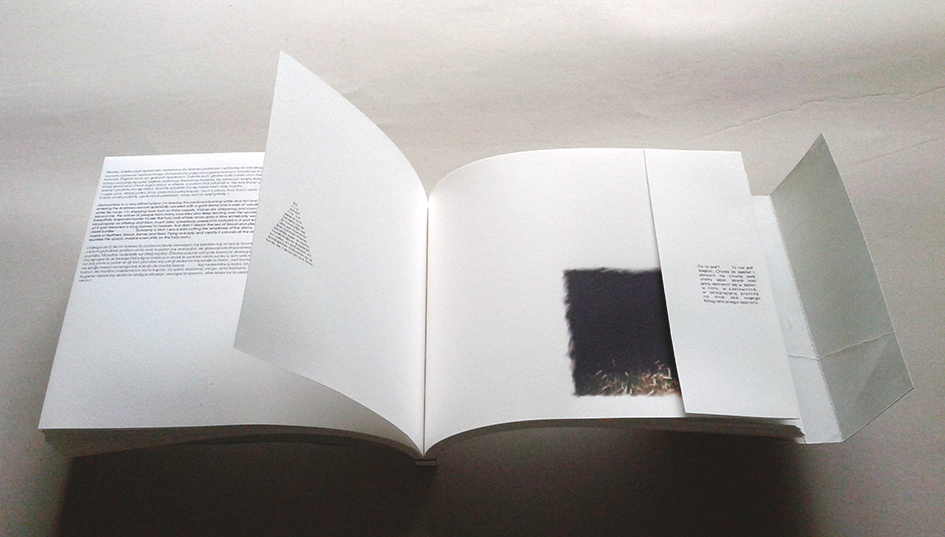


Plasticarium Prospectus by Sally Alatalo (USA), 2021. “In response to the material ubiquity of synthetic polymers, including their molecular integration into the earth’s bio-stream, Plasticarium Prospectus imagines a repository modelled on collection, classification and research strategies represented in museums, herbaria, libraries and other archives.”
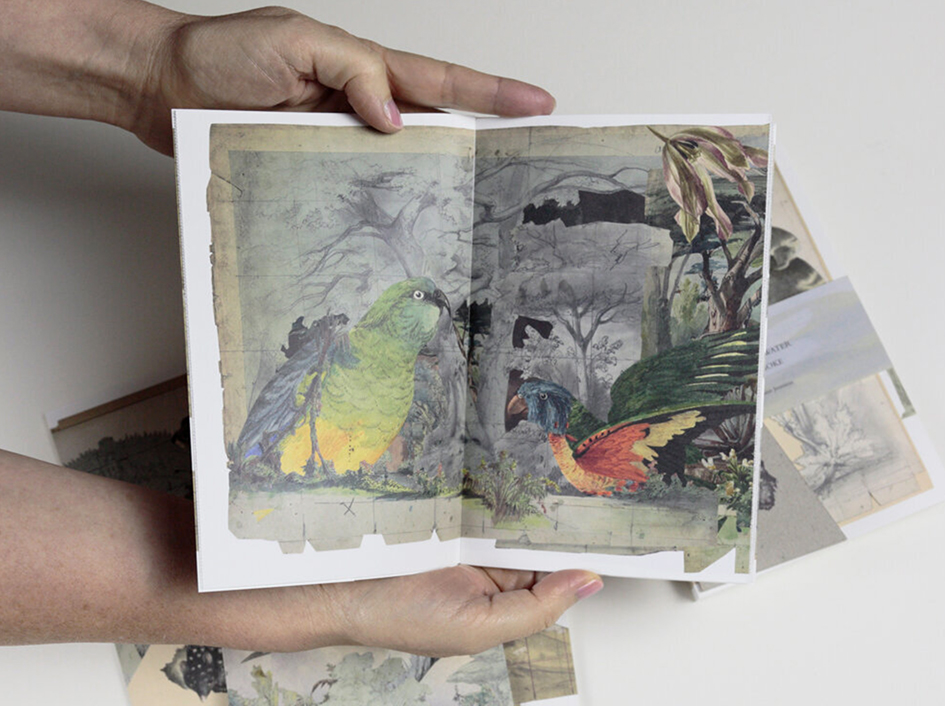
A hemline of sky, forest, and water through smoke, Gracia Haby and Louise Jennison (Australia), 2020. The artists’ books began with a picture which began with a catastrophe.
“From fire service updates and images and videos posted from on-the-ground and at-the-scene in a still-ongoing-at-the-time-of-publication series of bushfires, read on Twitter in the summer of 2019–20, assembled under the hashtags #AustraliaBurns and #ClimateCrisis. At the time of making these artists’ books, the full impact on tree species and wildlife will not be known until more assessments are done as fire grounds become accessible. This is climate change in its most fundamental form.
Collages pulled from – the snare of words read at the time, and belonging to other people, in news articles, and a collection of books on the bedside table.
From – foreign syntax.
I’m a grey and blue landscape. An assemblage of disparate scenes.
All the plants and algae, bacteria, invertebrates, fish, amphibians, reptiles, birds, mammals.
…. the animals confer that it will happen.
…. a range of harsh screeches and metallic whistles.
…. the moment of crisis has come.”
This Place (Volumes 1-6), Angie Butler/ABPress (UK), 2014-2016. Each pamphlet captures a fleeting experience or a glimpse; a pocket-sized memory of being here, tempting others to imagine. Made whilst on a residency at Deuchar Mill (Helen Douglas Weproductions), Yarrow, housed in wooden slipcase.
Outfalls, Judith Tucker & Harriet Tarlo (UK) 2018. “Outfalls is a collaboration between Judith Tucker (drawings) and Harriet Tarlo (texts) reflecting on the life of the Louth Navigation in North East Lincolnshire, published by Wild Pansy Press. They first encountered the canal at its outfall at Tetney Haven on the Humber Estuary. From here they traced the canal back to Louth and became fascinated in its past, present and future, the people who live there, and its blend of natural and cultural features which, in microcosm, reflect many global and national issues related to place, environment and heritage.”

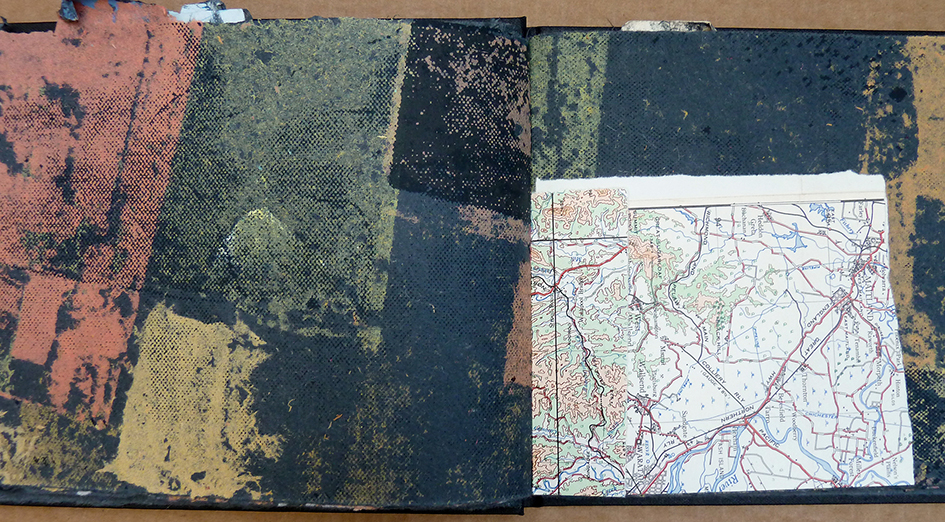

Grass of Parnassus, Lindisfarne, Nancy Campbell & Julie Johnstone, 2023. “A tribute to the dramatic landscape of Lindisfarne, a tidal island off the coast of Northumberland and the delicate and sweet-smelling saxifrage which thrives there.” Poem by Nancy Campbell; artwork & design by Julie Johnstone, Essence Press, 2023.
London Tank, CODEX Event 2, Australia, coordinated by Tim Mosely. One of a series of CODEX events creating collaborative artists’ books which consider history, landscape and place.
grass folded and pressed by Chrystal Cherniwchan & Craig Tattersall, 2022. grass folded and pressed “started on site(s) in the north west and the south west of england where both artists are located. field recordings were captured along with close recordings of site specific/historical objects using combinations of open mics, contact mics and hydrophones.
Once the audio had been harvested it was shared between them, along with photographs they made from the sites that would be further developed in their studios. again the results were sent back and forth, this time to be taken back to the original site to be played back and recorded in symphony with the spaces. slowly building a layering of site upon site, sound compressing sounds like geological layers.
Musical responses are woven into the score; utilising spoken word, typewriters as well as tape loops, humming, harmoniums and pianos. Accompanying the audio is a sound object in the form of a book that illustrates interventions with place, and the intimate act of listening throughout this collaborative process- merged places unfold.
The final audio and artist’s book are a result of these ‘conversations’ between artist and site, artist and artist and site and site.”
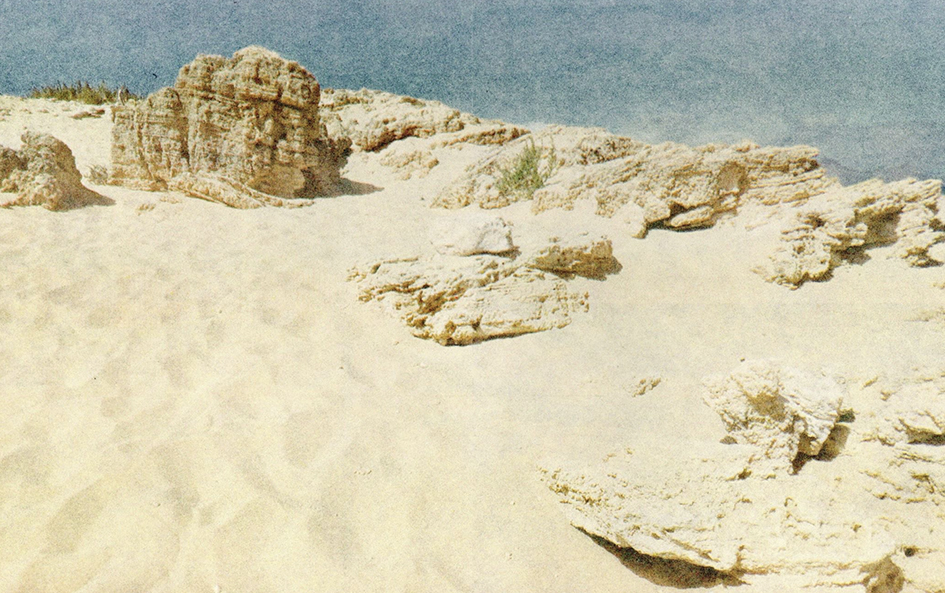
Aqq by Frans Baake. In summer 2012 Frans Baake made a trip to the western part of Greenland. The book made as a result is called ‘aqq.’ This is an abbreviation of the Greenlandic word ‘aqqut’, which means ‘road’. It also can form the stem that stands for a series of words and parts of sentences related to the meaning of ‘road’ as a subject.
This exhibition is open to the public Monday – Friday 9am-5pm. No booking needed. The library is on the first floor of B block.
For more information on Bower Ashton Library, visitor access and campus map, see the library website. You can also follow the library’s Twitter feed.
UWE Bristol, City Campus at Bower Ashton, Kennel Lodge Road, Bristol BS3 2JT.