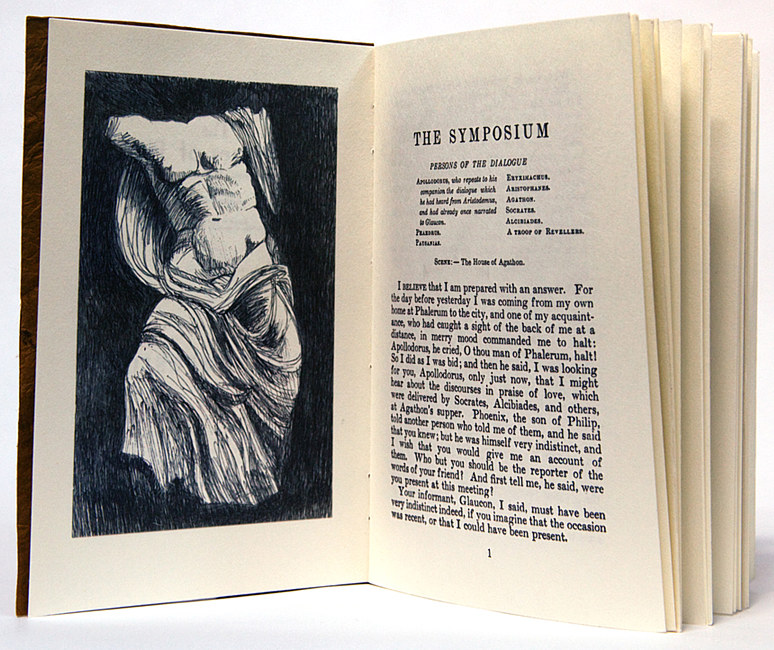
Symposium, 2012
Zea Morvitz, USA
| Zea Morvitz, USA, August
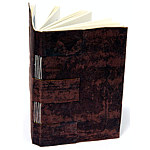
2012 The destruction of al-Mutanabbi Street - the street of booksellers - in Baghdad by a car bomb in 2007, is a book burning, no different than the book burnings by religious or political fanatics from Europe's Dark Age to the present day, who mean to end freedom of thought and rigidly impose their single belief system on all. It brings to mind the destruction of the monumental Buddha images in the Bamiyan Valley of Afganistan, and also the burning of the library of Alexandria and the munitions explosion that damaged the Parthenon in 1657 when Venetians bombarded the Ottoman forces occupying Greece. These last two incidents of destruction were casualties of war in which cultural loss is considered acceptable collateral damage, if it is considered at all. All such events expose the vulnerability and fragility of humanity's collective cultural storehouse. The art treasures of the past, as well as the present are always in danger of being lost through natural calamity, of course, but now, much more likely through human brutality, fear and malice. As W.B. Yeats wrote: Whatever flames upon the night Man's own resinous heart has fed. We are more than fortunate that some of the great works of the past have survived but it's obvious that we cannot blandly assume that they will continue to survive. We artists, poets, musicians, dancers, writers, performers must be active caretakers, preservers and propagators of the world's culture. An Inventory of al-Mutanabbi Street, a project to recapture imaginatively the wealth of books offered there, brings to mind my own earliest experiences in bookstores, and the great pleasure I felt, and still feel browsing among books old and new. Despite growing up in a house full of books - or even because of that - I sought out bookstores as soon as I could venture downtown alone. Seeking my own books was my way to learn about the world and what mattered too me. Usually I bought used books, tiny, cheap, ill-printed art books published in Europe in the 50's, poetry, and books I did not understand, books with mysterious and obscure subject matter, but that fit and felt good in my hand. Of course I did not simply buy these books, I took them home and poured over them. Each one was a key to a world full of meaning. I have many of these books still. For the Inventory of al-Mutanabbi Street project I wanted to represent such a book as I might have picked up at a bookstore long ago. On line, at Archive.org I found an out of copyright, but still readable, translation of Plato's Symposium. I chose this for its subject matter - on love, love of the beautiful and love of the Good - and because of its miraculous survival from the time of Socrates and Plato until now. To accompany this text I made drawings of damaged but surviving ancient sculpture, mostly Greek, which I based, not on the sculptures themselves, but on the grainy photo reproductions from the art books of the 50s that were my gateway into the art world. The book is laser printed. The text block is Japanese Shiramine paper. May there always be books www.zeamorvitz.com |