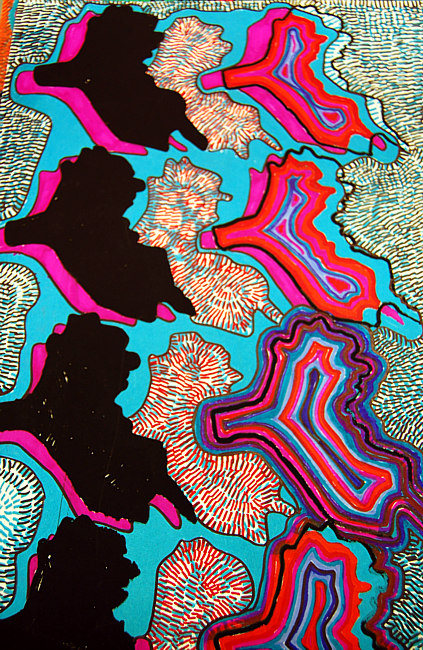
Iraq
Ingrid Sanchez, USA

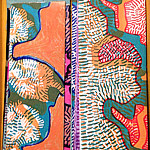
| Iraq;
Ingrid Sanchez, USA History is something I believe in and preserve within my work to create something new everyday. And if we take at least the concept and spirit of Al-Mutanabbi into our works we are changing, and building a new al-Mutanabbi Street out of books. The bricks towards a new foundation. We are giving the opportunity for the viewer of these books to have a chance to dream and to liberate from the pressure of daily life. It is a fundamental human right to dream and to have freedom of choice, as to how to live life. Over the years my work has taken many shapes and forms. The book projects on my website, are a culmination series of chapbooks along with silkscreen panels, which explored both poetry and the precarious existence of those living on the frontier between language and culture. In my final year of college and also throughout my graduate studies, I decided to concentrate my work on folk imagery along with the dissemination of stories. Each work became an intricate page of a life long chronicle. Constructing to me became a vital process, and similar to writing an endless “story on a string”. Stories on a string or Literatura de Cordel originated from a particular kind of chapbook that blind vendors in the streets of Medieval Italy, Portugal and Spain hung on a straight line in cords for commercial dissemination. After the arrival of the Spaniards and the Portuguese in the Americas, Literatura de Cordel became extremely popular in many Latin American countries. As the French Littérature de Colportage and the English pamphlets, the Portuguese and Spanish Literatura de Cordel usually measures four by six-and-half inches and numbering eight, sixteen, maximum thirty- two pages, and it is printed on newspaper-weight paper. The fourfold pages, sold uncut, fall into stanzas usually of six or seven lines. The cover, generally in pastel, bears a photograph or engravings not necessarily related to the text. The frequently illiterate reader will recognize a favourite story or be tempted to take home a new choice depending on the design on the cover. The author's or publisher's name or both usually appear above the title. This tradition, however, incorporates multiple strands such as philosophy, history, and politics. I became interested in following the trans migration of these chap-books and investigating areas where this type of storytelling through Literatura de Cordel is still practiced today. ingrid_sanchez01@yahoo.com www.iasanchez.com/ |