Pain and Memory
Mona R. Kriegler, UK
Photography by Dafne Louzioti
| Pain and Memory;
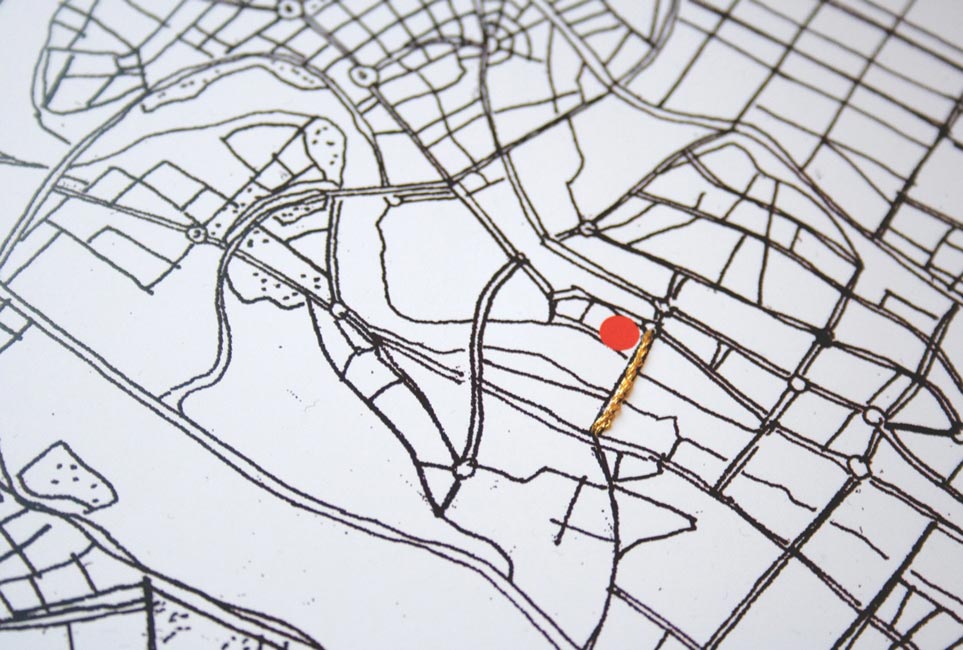
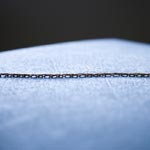
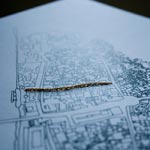
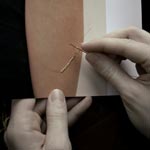
Mona R. Kriegler, London, UK, 2012/2013 When things break, they are not always thrown away. In Iraq, the “khayyat al-farfuri” once came to villages and towns to repair broken objects, from glasses and teapots to plates and leather goods. He did not only stitch, but also used a metal coating to give the object stability and a new form. In some East Asian cultures broken pieces of porcelain or ceramics are put back together again as a way of emphasising their brokenness. The artist traces the cracked lines with golden paint, highlighting the randomness of the pieces, which then become the artist's “guide” (wabisabi). Both traditions capture that what was once broken is now fragmented and whole at the same time. This recaptured existence breathes new life into the object, suggesting a metaphor for the fragility of our lives and the pain within us, which for this project is transferred to the human body. For the making of this art book we asked people “where are you broken?” and then photographed those parts of their bodies that have experienced fracture, highlighting the areas with golden paint. Through the process of photographing and listening we learned that each narrative of pain embodies memory and that brokenness inherits manifold meanings, interconnecting the physical, the psychological and the emotional. People shared their pain and the memories of it, ranging from an internal body part holding a story of pain - invisible to the outside world - to a “broken brain” and a scarred central nervous system (multiple sclerosis). There were stories of scars and bruises on the surface of the skin, but also fractured bones, paralysis and the loss of a limb. Some described the experience of “non-feeling”, or not being able to sing and scream while others spoke about a broken femininity, or a broken heart, or fear. We heard one story of loss of eyesight reducing seeing to shadows , and another of someone's death experienced as one's own brokenness. The body does not forget. Neither does the psyche when it is traumatised by a painful experience. In many ways, the brokenness of the human body mirrors al-Mutanabbi Street. We can imagine the street as a scar, and the city as a wounded body. Neither Baghdad nor al-Mutanabbi Street forget the pain and the suffering. Neither do the people of Iraq. To highlight the brokenness of the street and its people and the loss of its books, every page in this book is stitched by hand with golden thread, crafting the outline of the scar that is al-Mutanabbi Street. The act of stitching does not only admit irreplaceable loss, but suggests a transition from different states of pain to an everlasting memory, both echoed in the notion of brokenness. It also relates to medical sutures: the act of stitching is necessary, so the process of healing is allowed to take place. Inspired by the psychoanalysis of dreams (dreaming as a way to deal with the pain of memory as well as trauma, processing the cycle of breaking and healing) and the aesthetics of wabi-sabi, this book is an empathic gesture of grace amidst chaos; it gives value to imperfection, valorises incompleteness and recognises brokenness. 1st edition, 21 x 21 cm. Digital print / sketch / embroidered by hand on paper. |