Al-Mutanabbi Street Starts Here Lois Graessle, UK
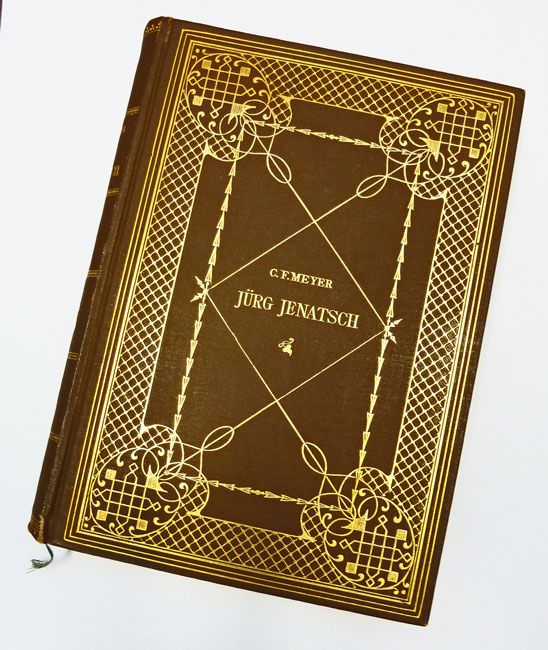
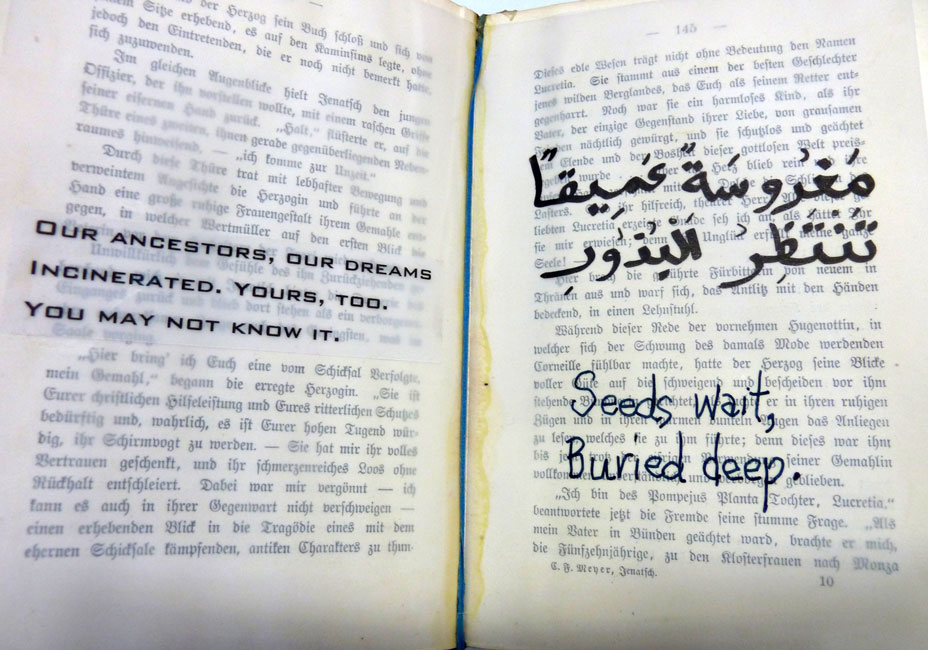
Shortly after I was invited to join the project, my husband Eric Bourne died and left me his hundreds of books. I chose three that he had inherited from his aunt Dr Else Borchard to use as the bases of my contribution to the project.
Both Eric and his aunt left Germany for England as refugees in the 1930s. Eric was born Ulrich Borchard in Berlin in 1924 but had to change his name when he joined the British army in WWII.
The three books I chose were published in Leipzig between 1897 and 1903 and written in the old gothic blackletter Fraktur typeface. In 1941 the Nazis prohibited its use. What do I do with books brought so preciously into exile, books that I cannot read and no one else seems to want? Will they be incinerated?
Lois Graessle: author, book artist and consultant to non-profit organizations, visited Baghdad in 1966 while travelling overland from London to India. A native of Florida, she has lived in England since 1967, working with organizations dealing with society's messy corners – refugees, the homeless, mental health, young people in difficulties. She is co-author of both Planning Together and Meeting Together, approaches to working co-operatively. Her most recent book is Blessed Mess - tales of living, loving and dying with stuff.
Dr Else Borchard: doctor, pioneer in the use of electrocardiograms, Jewish – brought the books used in this project to England when she had to leave Neckargamund, near Heidelberg, Germany, in 1938.
Translators
Marieke Bosman has been chief executive of the Asfari Foundation since 2011. The Foundation, which works in the UK and Syria, Lebanon and Palestine aims to create open, educated, productive and tolerant societies through education and civil society work with young people. Marieke has over 25 years’ experience in social development across the Arab world, particularly in Syria, where she lived and worked for several years. http://www.asfarifoundation.org.uk/who-we-are/mission/
Dr Fouad Fouad, Syrian academic, poet and doctor of public health from Aleppo, lost all he built up including his library of 5000 books in the Syrian conflict. Rather than helping his grown children build up their lives, as he had looked forward to doing at this stage of his life, he is having to rebuild his own. He is currently assistant research professor at the Faculty of Health Sciences, American University of Beirut.